Spiritual Haunt Delhi: A Deep Dive into India’s Supernatural Open World
Spiritual Haunt Delhi stands as a landmark title in the Indian gaming industry, a product of Daman Games’ vision to blend desi cultural authenticity with cutting-edge gameplay mechanics. Launched on 15 August 2023—coinciding with India’s 76th Independence Day—the game is more than just an action-adventure; it’s a love letter to Delhi, a city where 700 years of history collide with bustling modern life, and where spiritual energy seeps through every gully, monument, and market square.
Unlike generic open-world games that rely on Western tropes, Spiritual Haunt Delhi draws deeply from India’s diverse religious traditions—Hinduism, Islam, Sikhism, Jainism, and Buddhism—weaving their myths, rituals, and iconography into a cohesive supernatural narrative. Players step into the shoes of Aarav Mehta, a 24-year-old archaeology graduate with a mysterious connection to Delhi’s past, as he navigates a city teetering on the edge of a spiritual apocalypse. The game’s core premise—“Protect the mortal realm from the awakening of forgotten spiritual forces”—resonates with Indian audiences familiar with tales of bhoots, djinns, and divine beings from childhood.
What sets Spiritual Haunt Delhi apart is its unwavering commitment to authenticity. The development team spent over two years researching Delhi’s historical sites, consulting religious scholars, and interviewing locals to capture the city’s essence—from the chaotic energy of Chandni Chowk’s Paranthe Wali Gali to the serene calm of the Lotus Temple, and from the echoing courtyards of Jama Masjid to the ancient ruins of Qutub Minar. Every landmark in the game is a photorealistic recreation, complete with tiny details like the sound of aarti bells at dawn, the honking of Delhi Metro trains, and the banter of vendors selling chaat and lassi.
As a gaming experience, Spiritual Haunt Delhi balances action, puzzle-solving, and exploration with a narrative that celebrates India’s unity in diversity. Whether you’re chanting Vedic mantras to dispel evil spirits, using Sufi music to calm a restless djinn, or solving a riddle rooted in Sikh philosophy to unlock a hidden temple, the game educates as it entertains—making it a hit among both casual gamers and history enthusiasts. Within a month of its release, the game sold over 2 million copies in India alone, trending on social media with hashtags like #SpiritualHauntDelhi and #DesiGameRevolution, and winning the “Best Indian Game” award at the 2023 Game Developers Conference India.
Development History: From Delhi’s Streets to Gaming Screens
The Genesis of a Desi Vision
The idea for Spiritual Haunt Delhi was born in 2019, when a group of Delhi-based game developers at Daman Games grew frustrated with the lack of authentic Indian representation in the global gaming market. “We were tired of seeing India portrayed as a land of snake charmers and palaces in Western games,” recalls Ravi Verma, Lead Game Designer at Daman Games. “Delhi is a city of contrasts—you can walk from a 14th-century mosque to a modern mall in 10 minutes—and we wanted to capture that magic. We asked ourselves: What if the spiritual energy of these ancient sites wasn’t just symbolic? What if it was real, and waking up?”
The team began with extensive field research, spending six months visiting Delhi’s most iconic landmarks. They camped outside Qutub Minar to study its architecture at different times of the day, sat through aarti ceremonies at Akshardham to record the sounds and rituals, and wandered the lanes of Chandni Chowk interviewing shopkeepers and locals to understand the area’s vibe. “One elderly uncle at a paratha dhaba in Old Delhi told us stories of how his grandfather used to see ‘shadowy figures’ near the Red Fort at night,” Verma shares. “Those little anecdotes became the foundation of our supernatural lore.”
Research & Cultural Sensitivity
Cultural authenticity was a top priority for the development team, which is why they hired a panel of 12 religious scholars—representing Hinduism, Islam, Sikhism, Jainism, and Buddhism—to advise on the game’s rituals, symbols, and lore. “We didn’t want to trivialize anyone’s faith,” explains Zara Khan, Cultural Consultant for the game. “For example, when designing the Jama Masjid level, we consulted with the imam of the mosque to ensure the prayer rituals, architecture, and even the call to prayer were accurate. Similarly, for the Gurudwara Bangla Sahib section, we worked with Sikh priests to make sure the kirtan and langar scenes were respectful and true to tradition.”
The team also focused on capturing Delhi’s linguistic diversity. The game features dialogue in Hindi, Punjabi, Urdu, and English, with regional dialects like Delhi’s colloquial “Dilliwallah Hindi” (complete with words like “yaar,” “bhai,” and “jugaad”) spoken by NPCs. “We wanted players to feel like they’re actually walking through Delhi,” says Amit Mehta, Lead Writer. “When a vendor in Chandni Chowk calls out ‘Aloo tikki! Garam garam aloo tikki!’ in that distinct Delhi accent, it’s not just flavor—it’s authenticity.”
Technical Development & Challenges
Spiritual Haunt Delhi was developed using Unreal Engine 5, a choice driven by the team’s desire to create photorealistic environments while maintaining smooth gameplay. The biggest technical challenge was recreating Delhi’s dense urban landscape—from the narrow lanes of Old Delhi to the wide roads of Connaught Place—without compromising on performance. “Delhi is a crowded city, and we wanted that chaos to feel alive,” says Rajiv Sharma, Technical Director. “We used a combination of procedural generation and hand-crafted details to populate the streets with NPCs, vehicles, and vendors, all while ensuring the game ran smoothly on both high-end PCs and mid-range mobile devices.”
Another challenge was designing the game’s supernatural elements to feel rooted in Indian mythology rather than Western horror tropes. “We didn’t want jump scares for the sake of jump scares,” Verma explains. “In Indian folklore, spirits are often tied to unresolved emotions or past wrongs. So in the game, a bhoot haunting a gully in Old Delhi isn’t just a monster—it’s the spirit of a tailor who was cheated by a customer and died with a grudge. To defeat him, you don’t just fight him—you resolve his grievance by returning the stolen money to his family. That’s the kind of storytelling we wanted.”
Launch & Marketing
The game’s launch on 15 August 2023 was a deliberate choice, designed to tap into India’s national pride. Daman Games partnered with Delhi Tourism to launch a “Spiritual Haunt Delhi Trail,” a guided tour of the real-life landmarks featured in the game, and organized midnight launch events at gaming cafes across Delhi, Mumbai, Bangalore, and Kolkata. The marketing campaign focused on emotional storytelling, with ads showing gamers reacting to seeing their hometowns portrayed accurately in a video game.
One of the most successful marketing stunts was a “Mystery of the Missing Idol” campaign, where Daman Games placed life-sized replicas of an in-game idol at various Delhi landmarks, inviting players to find them and share photos on social media for a chance to win exclusive in-game content. The campaign went viral, with over 50,000 participants and millions of impressions on Twitter and Instagram.
Gameplay: Blend of Spirituality, Combat, and Exploration
Spiritual Haunt Delhi is an open-world action-adventure game with elements of puzzle-solving, stealth, and character progression. The core gameplay loop revolves around exploring Delhi’s spiritual sites, uncovering the game’s lore, and battling supernatural entities to prevent the merging of the mortal and spiritual realms. What makes the gameplay unique is its integration of Indian spiritual practices and cultural elements—every mechanic feels rooted in desi traditions, rather than being a generic copy of Western games.
Open World Exploration: Delhi as a Character
The game’s open world spans over 50 square kilometers of Delhi, divided into five distinct regions: Old Delhi (Chandni Chowk, Red Fort, Jama Masjid), Mehrauli (Qutub Minar, Lotus Temple), Connaught Place (modern Delhi), Noida (tech hub), and Akshardham (spiritual center). Each region has its own distinct vibe, challenges, and supernatural entities—Old Delhi is haunted by bhoots and pretas tied to the city’s Mughal past, while Mehrauli is home to djinns and ancient spirits from the Delhi Sultanate era.
Exploration is encouraged through side quests, collectibles, and hidden secrets. Players can traverse the city using a variety of methods: walking, cycling (a popular mode of transport in Delhi’s narrow lanes), driving auto-rickshaws and cars, or using the Delhi Metro for fast travel. The Metro system is a fully functional in-game feature, with accurate station names (like Chandni Chowk, Rajiv Chowk, and Qutub Minar Metro Station) and realistic train schedules. “We wanted the Metro to feel like a real part of the game, not just a fast travel menu,” says Verma. “You can sit on the train, listen to commuters chat, and even encounter random side quests—like helping a woman find her lost child or stopping a pickpocket.”
Save points are scattered throughout the city in the form of “Dhaba Stops”—iconic Delhi dhabas where players can refuel, interact with NPCs, and save their progress. Each dhaba has its own unique owner and backstory, from a Punjabi dhaba owner who doubles as a spiritual healer to a Muslim chaiwala who shares stories of the city’s past. “Dhabas are the heart of Delhi’s social life,” explains Mehta. “They’re where people from all walks of life come together, and we wanted that sense of community to be part of the game.”
Combat Mechanics: Spiritual Powers & Jugaad
Combat in Spiritual Haunt Delhi is centered around two core systems: Spiritual Powers and Jugaad Gadgets. Spiritual Powers are unlocked as players progress through the game, each tied to a different religious tradition. For example:
Vedic Mantras (Hinduism)
Chant powerful mantras like “Om Namah Shivaya” to create a protective aura or “Gayatri Mantra” to heal allies. Each mantra has a cooldown period, and players must learn the correct pronunciation (voiced by professional priests) to maximize effectiveness.
Sufi Whirlwind (Islam)
Channel the energy of Sufi dervishes to create a whirlwind that dispels evil spirits and calms restless djinns. The ability is unlocked after completing a quest at the Nizamuddin Dargah.
Kirpan Strike (Sikhism)
Wield a sacred kirpan (blessed by a Sikh priest) to deliver powerful melee attacks against demonic entities. The kirpan’s power increases with each act of selflessness, encouraging players to help NPCs in side quests.
Jain Ahimsa Shield (Jainism)
Use the principle of ahimsa (non-violence) to create a shield that deflects attacks and converts hostile spirits to neutral. This ability is ideal for stealth-focused players who prefer to avoid combat.
Buddhist Meditation (Buddhism)
Enter a meditative state to slow down time and gain insight into enemy weaknesses. The ability is unlocked after solving a puzzle at the Buddhist Temple in Delhi.
Jugaad Gadgets, on the other hand, are homemade devices inspired by Delhi’s street-smart culture. These include:
- Spiritual Detector Torch: A modified torch that glows green when near spiritual energy and red when near hostile entities. Made from a regular torch, a smartphone camera, and some copper wire (jugaad at its finest).
- Chaat Masala Grenade: A grenade filled with chaat masala (a popular Delhi spice mix) that temporarily blinds and confuses enemies. Perfect for escaping tough fights.
- Rickshaw Horn Blaster: A modified auto-rickshaw horn that emits a high-pitched sound capable of stunning low-level spirits. Can be upgraded with a larger battery for more damage.
- Lassi Healing Potion: A refreshing glass of lassi (yogurt drink) that heals the player and boosts their spiritual energy. Can be bought from dhabas or made using ingredients collected from markets.
Combat encounters are designed to be strategic rather than button-mashing. For example, a djinn haunting the Qutub Minar is weak to Sufi music, so players must first find a harmonium in the nearby village, then use it to calm the djinn before attacking. A bhoot in Chandni Chowk, meanwhile, is vulnerable to light, so players must use their torch and the aarti lamps in the area to weaken it.
Puzzle-Solving: Rooted in Indian Mythology
Puzzles are a key part of Spiritual Haunt Delhi’s gameplay, and each one is inspired by Indian mythology, history, or culture. Unlike generic puzzles found in most games, these require players to use their knowledge of Indian traditions—making them both challenging and educational.
One example is the “Akshardham Light Puzzle,” where players must arrange a series of mirrors to reflect light onto statues of Hindu deities in the correct order (based on the Dashavatara, the ten avatars of Vishnu). Another puzzle, set in Jama Masjid, requires players to solve a riddle in Urdu that translates to: “I am born from water, but die when submerged. I light up the night, but fade in the day. What am I?” (The answer: a lamp.)
Cultural Note: Many of the game’s puzzles are designed to teach players about Indian mythology and history. For example, the “Qutub Minar Iron Pillar Puzzle” requires players to learn about the pillar’s ancient inscriptions (which mention King Chandragupta II) to unlock a hidden chamber. Daman Games has even released a companion app with detailed explanations of each puzzle’s cultural context, making the game a valuable educational tool.
Puzzles also vary in difficulty, with optional “Expert Mode” puzzles that offer rare rewards like powerful spiritual artifacts. These expert puzzles often require deep knowledge of Indian culture—for example, a puzzle in Gurudwara Bangla Sahib asks players to arrange the Sikh Gurus in the correct order of their birth, while a puzzle in the Jain Temple requires knowledge of the 24 Tirthankaras.
Character Progression: A Journey of Spiritual Growth
Player progression in Spiritual Haunt Delhi is tied to Aarav’s spiritual growth, rather than just leveling up stats. As players complete quests, help NPCs, and solve puzzles, Aarav’s “Prana Meter” increases, unlocking new spiritual powers and upgrading existing ones. The Prana Meter is divided into five levels, each corresponding to a different stage of spiritual awakening:
- Novice: Unlocks basic abilities like the Spiritual Detector Torch and the Gayatri Mantra.
- Seeker: Unlocks the Sufi Whirlwind and Kirpan Strike, and upgrades the Prana Meter by 50%.
- Disciple: Unlocks the Jain Ahimsa Shield and Buddhist Meditation, and gains the ability to fast-travel via Metro.
- Mystic: All existing abilities are upgraded, and Aarav gains the ability to communicate with friendly spirits.
- Enlightened: Unlocks the ultimate ability, “Unity Aura,” which combines the power of all five religious traditions to defeat even the strongest enemies.
Players can also customize Aarav’s appearance with traditional Indian clothing, including kurtas, pyjamas, turbans, and salwar kameez. These outfits aren’t just cosmetic—some offer gameplay bonuses. For example, a Sikh turban increases the power of the Kirpan Strike, while a Sufi cap boosts the effectiveness of the Sufi Whirlwind. Outfits can be bought from markets across Delhi or earned as quest rewards.
Setting & Lore: Delhi’s Spiritual Underworld
The World of Spiritual Haunt Delhi
Spiritual Haunt Delhi is set in a semi-fantastical version of modern-day Delhi, where the city’s rich history and spiritual energy have given rise to a parallel “Spiritual Realm.” This realm coexists with the mortal world, invisible to most people—except for those with a special connection to the spiritual plane, like Aarav.
The game’s world is divided into two layers: the Mortal Realm (the Delhi we know, with its markets, monuments, and traffic jams) and the Spiritual Realm (a twisted, ethereal version of the city where spirits, gods, and demons reside). As the game progresses, the boundary between these two realms begins to blur, allowing supernatural entities to enter the mortal world and causing chaos.
Each landmark in Delhi has a corresponding “Spiritual Echo”—a manifestation of its history and spiritual significance. For example, the Qutub Minar’s Spiritual Echo is a towering, glowing structure surrounded by djinns from the Delhi Sultanate era, while the Lotus Temple’s Spiritual Echo is a serene garden inhabited by benevolent spirits of peace and harmony. These Spiritual Echoes are where most of the game’s main quests take place, and they can only be accessed by solving specific puzzles or using spiritual abilities.
The Lore: The Awakening of the Forgotten Deva
The game’s lore is rooted in Delhi’s history as the “City of Seven Cities,” a reference to the seven distinct settlements that have been built and destroyed on the same site over the centuries (Lal Kot, Siri, Tughlaqabad, Jahanpanah, Firozabad, Dinpanah, and Shahjahanabad). According to the game’s backstory, each of these cities was protected by a powerful spiritual entity known as a “Deva of the City.”
However, during the British Raj, these Devas were forgotten as India’s cultural and spiritual traditions were suppressed. Their power faded, and they were sealed away in the Spiritual Realm. Now, in the present day, a group of radical archaeologists (the game’s secondary antagonists) have uncovered an ancient artifact—the “Amulet of Ananta”—which has the power to唤醒 the forgotten Devas. Their goal is to use the Devas’ power to “purify” Delhi of modern influences and restore it to its “glorious past.”
Unfortunately, the Devas have been corrupted by centuries of neglect and anger. The most powerful among them, Mahakala, the Deva of Shahjahanabad, has become a vengeful entity determined to merge the Spiritual and Mortal Realms, destroying both in the process. Aarav, it turns out, is a descendant of the priests who originally sealed the Devas away, and he possesses the “Blood of the Guardians”—a rare genetic trait that allows him to communicate with spirits and wield spiritual powers.
The game’s main quest follows Aarav as he teams up with a diverse group of allies to stop Mahakala and the radical archaeologists. Along the way, he uncovers the truth about his family’s past, learns to master his spiritual abilities, and discovers that the key to saving Delhi lies in embracing India’s diversity—only by combining the power of all five religious traditions can Mahakala be defeated.
Supernatural Entities: From Bhoots to Devas
Spiritual Haunt Delhi features a wide range of supernatural entities, each drawn from Indian folklore and mythology. These entities are divided into three categories: Friendly Spirits, Neutral Entities, and Hostile Creatures.
Friendly Spirits
These are spirits that offer help to Aarav, often in exchange for completing small tasks. Examples include:
- The Chaiwala Spirit: The ghost of a 19th-century chaiwala who haunts Connaught Place. He offers Aarav healing lassi in exchange for finding his lost copper kettle.
- The Sufi Saint: The spirit of a revered Sufi saint who resides in Nizamuddin Dargah. He teaches Aarav the Sufi Whirlwind ability after Aarav helps him reunite with his long-lost disciple.
- The Jain Monk: A peaceful spirit who inhabits the Jain Temple. He grants Aarav the Ahimsa Shield after Aarav helps him protect the temple’s sacred relics from thieves.
Neutral Entities
These entities are neither friendly nor hostile, but their behavior can change based on Aarav’s actions. Examples include:
- The Djinn of Qutub Minar: A powerful djinn who guards the Qutub Minar’s Spiritual Echo. He will attack Aarav if he tries to enter without permission, but will help him if Aarav solves his riddle.
- The Bhoot of Chandni Chowk: The ghost of a tailor who was cheated by a customer. He will haunt Aarav if he ignores his plea for help, but will become friendly once Aarav returns the stolen money to his family.
- The Naga Spirit: A serpent spirit that lives in the Yamuna River. It will attack anyone who pollutes the river, but will guide Aarav to a hidden treasure if he cleans up a section of the riverbank.
Hostile Creatures
These are the game’s main enemies, corrupted spirits and demons determined to stop Aarav. Examples include:
- Kaliyuga Bhoot: A powerful bhoot that feeds on the negativity of modern Delhi. It haunts the lanes of Old Delhi and can only be defeated with the Gayatri Mantra.
- Asura Warriors: Demonic warriors summoned by Mahakala to protect his stronghold. They wield weapons made of dark energy and are immune to physical attacks—only spiritual powers can harm them.
- Shadow Djinn: Corrupted djinns that can turn invisible and teleport. They are weak to the Sufi Whirlwind and can be detected with the Spiritual Detector Torch.
- Mahakala: The game’s final boss, a towering Deva with the power to control darkness and manipulate time. Defeating him requires Aarav to use all five spiritual abilities in sequence, symbolizing the unity of India’s religious traditions.
“What I love most about Spiritual Haunt Delhi is how it treats Indian folklore with respect. The supernatural entities aren’t just monsters—they have backstories, motivations, and ties to the city’s history. It’s like playing through a collection of Delhi’s oldest ghost stories, but with a modern twist.”
Character Roster: Allies, Antagonists, and NPCs
Playable Character: Aarav Mehta
Aarav Mehta is the game’s protagonist, a 24-year-old archaeology graduate from Delhi University. Raised by his grandfather (a former archaeologist) after his parents died in a car accident, Aarav has always been fascinated by Delhi’s history. He is kind-hearted, curious, and a little naive at the start of the game, but grows into a confident spiritual warrior as the story progresses.
Aarav’s personality is shaped by his Delhi upbringing—he’s street-smart, loves chaat and lassi, and has a dry sense of humor. He speaks fluent Hindi and English, with a hint of Delhi’s colloquial accent. His motivation for stopping Mahakala is personal: his grandfather was killed by the radical archaeologists while trying to protect the Amulet of Ananta. As he uncovers his family’s past, he realizes that he’s not just fighting for Delhi—he’s honoring his grandfather’s legacy.
Aarav’s character arc is one of self-discovery. At the start of the game, he doubts his abilities and is hesitant to embrace his spiritual heritage. But as he meets his allies and learns about the Devas, he comes to understand that his “weakness” (his empathy for others) is actually his greatest strength. By the end of the game, he has fully embraced his role as a Guardian of Delhi, using his spiritual powers to protect the city and its people.
Allies: A Team of Diverse Warriors
Aarav is not alone in his quest. He is joined by four allies, each representing a different religious tradition and bringing unique skills to the team. These allies are not just sidekicks—they have their own backstories, motivations, and character arcs, and their relationships with Aarav evolve throughout the game.

Zara Khan (26)
A Sufi mystic from Nizamuddin. Zara can communicate with djinns and wield Sufi music as a weapon. She joins Aarav after he helps her save her dargah from shadow djinns. Her motivation is to restore balance to the spiritual realm, which she believes has been disrupted by human greed.
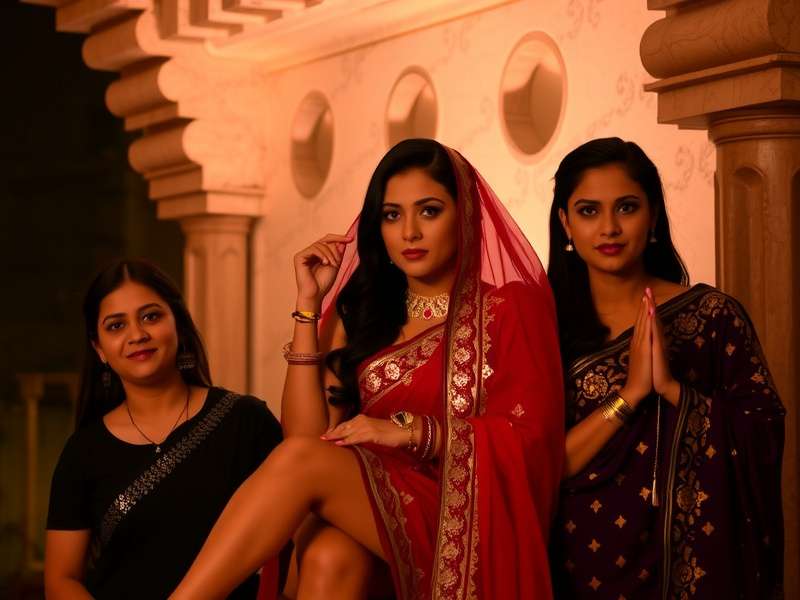
Simran Kaur (27)
A Sikh warrior-priestess from Gurudwara Bangla Sahib. Simran is a master of the kirpan and hand-to-hand combat. She joins Aarav after he helps her recover a stolen Guru Granth Sahib manuscript. Her motivation is to protect the innocent and uphold the Sikh values of justice and selflessness.

Raju Chaudhary (22)
A street-smart gully boy from Chandni Chowk. Raju is an expert in jugaad and knows Delhi’s lanes like the back of his hand. He joins Aarav after Aarav helps him get out of trouble with a local gang. His motivation is to prove that “gully boys” can be heroes too.

Meera Sharma (30)
A Jain scholar and archaeologist from Akshardham. Meera is an expert in ancient Indian texts and can decode the game’s most complex puzzles. She joins Aarav after she discovers that the radical archaeologists are her former colleagues. Her motivation is to atone for her past mistakes and protect India’s cultural heritage.
The allies’ interactions with each other are a highlight of the game. Zara and Simran initially clash over their different religious beliefs, but eventually learn to respect each other’s traditions. Raju provides comic relief with his street-wise comments, while Meera acts as the team’s voice of reason. Together, they form a diverse group that symbolizes India’s unity in diversity—a core theme of the game.
Antagonists: The Forces of Chaos
The game’s antagonists are a mix of human and supernatural foes, each with their own motivations for wanting to awaken the Devas.
Dr. Arjun Verma (45)
The leader of the radical archaeologists and the game’s main human antagonist. Dr. Verma is a former colleague of Meera and a disillusioned archaeologist who believes that modern India has “lost touch with its roots.” He is convinced that awakening the Devas will restore India to its “golden age,” and is willing to sacrifice millions of lives to achieve his goal.
Dr. Verma is a complex villain, not a one-dimensional evil-doer. He genuinely believes that he is doing the right thing, and his backstory—his parents were killed in the 2002 Gujarat riots—explains his hatred for modern India’s divisions. His final confrontation with Aarav is emotional, as he begs Aarav to see his point of view before being defeated.
Mahakala (Ageless)
The game’s final boss and the corrupted Deva of Shahjahanabad. Mahakala was once a benevolent guardian of Delhi, but centuries of neglect and anger have turned him into a vengeful entity. He believes that humans are unworthy of Delhi’s spiritual heritage and wants to merge the Spiritual and Mortal Realms to “purify” both.
Mahakala’s design is a mix of Mughal and Hindu imagery—he has the body of a giant, with skin like black marble and eyes that glow with red light. He wields a sword made of dark energy and can summon shadow djinns and asura warriors to fight for him. His boss fight is one of the game’s most epic moments, requiring Aarav and his allies to use all their skills and work together as a team.
Lieutenants of Mahakala
Mahakala is supported by four lieutenants, each representing a different era of Delhi’s history:
- The Sultan’s Ghost: The spirit of a 14th-century Delhi Sultan, corrupted by Mahakala’s power. He guards the Qutub Minar’s Spiritual Echo.
- The Mughal Princess: The ghost of a Mughal princess who died of a broken heart. She haunts the Red Fort’s Spiritual Echo and can control fire.
- The British Officer: The spirit of a British colonial officer who was killed during the 1857 Sepoy Mutiny. He guards the Connaught Place’s Spiritual Echo and wields a rifle made of dark energy.
- The Modern Cynic: The spirit of a 21st-century businessman who sold his soul to Mahakala for wealth. He haunts Noida’s Spiritual Echo and can manipulate technology.
Notable NPCs
Spiritual Haunt Delhi features a cast of memorable NPCs, each with their own stories and side quests. Some of the most notable include:
- Uncle Ramesh (65): A paratha seller in Chandni Chowk who gives Aarav side quests to help local residents. He is also a former spiritual healer who teaches Aarav basic mantras.
- Imam Zainuddin (50): The imam of Jama Masjid who provides Aarav with information about the djinns haunting the mosque. He rewards Aarav with a blessed prayer bead that increases his spiritual power.
- Guruji (70): A Hindu priest at Akshardham who helps Aarav decode ancient Vedic texts. He is revealed to be a former Guardian of Delhi and Aarav’s grandfather’s old friend.
- Bibi Fatima (55): A Sufi woman at Nizamuddin Dargah who teaches Zara new Sufi abilities. She shares stories of the dargah’s history and the importance of tolerance.
Technical Specifications: Powering Delhi’s Spiritual World
Spiritual Haunt Delhi was built using Unreal Engine 5, one of the most advanced game engines in the industry, allowing for photorealistic graphics, dynamic lighting, and smooth gameplay. The development team focused on optimizing the game for a wide range of devices, from high-end PCs to mid-range mobile phones, ensuring that players across India could enjoy the game without compromising on quality.
Core Technical Details
| Feature | PC | PlayStation 5 / Xbox Series X/S | Mobile (Android/iOS) |
|---|---|---|---|
| Engine | Unreal Engine 5 | Unreal Engine 5 | Unreal Engine 5 (Mobile Optimized) |
| Resolution | Up to 4K/60fps | 4K/60fps | 1080p/30fps (Adjustable) |
| Storage Requirements | 80 GB | 75 GB | 15 GB |
| Minimum RAM | 8 GB | 16 GB (Console) | 4 GB |
| Graphics Card | NVIDIA GTX 1060 / AMD RX 580 | Console-Grade GPU | Adreno 618 / Mali-G72 or Equivalent |
| Operating System | Windows 10/11 (64-bit) | PS5 System Software / Xbox OS | Android 10+ / iOS 14+ |
| Audio | Stereo / 5.1 Surround Sound | 3D Audio / Dolby Atmos | Stereo |
| Controller Support | Yes (Xbox/PS Controllers) | Yes | Touchscreen / Bluetooth Controllers |
Graphics & Visual Design
The game’s graphics are a standout feature, with photorealistic environments that capture Delhi’s beauty and chaos. The development team used a combination of photogrammetry (3D scanning of real-world locations) and hand-crafted details to recreate Delhi’s landmarks. For example, the Qutub Minar’s stone texture was scanned from the real monument, while the shops in Chandni Chowk were designed based on photos and sketches taken during field research.
Dynamic lighting plays a key role in creating the game’s atmosphere. Daytime scenes are bright and vibrant, with sunlight filtering through the leaves of peepal trees and reflecting off the marble floors of temples. Nighttime scenes, on the other hand, are dark and eerie, with moonlight casting long shadows and spiritual energy glowing in neon hues of blue, purple, and gold. The transition between day and night is seamless, with the sky changing colors and NPCs adjusting their behavior (e.g., vendors closing their shops, spirits becoming more active).
The game’s character designs are equally detailed, with each character’s clothing and appearance reflecting their background. Zara wears a traditional Sufi outfit with a headscarf and loose-fitting clothes, while Simran wears a Sikh salwar kameez with a turban. Raju wears a casual kurta and jeans, with a chain around his neck and a cap on his head. The supernatural entities are designed to be both terrifying and visually striking, with Mahakala’s towering form and glowing eyes being a particular highlight.
Audio Design: The Sound of Delhi
Audio is a crucial part of Spiritual Haunt Delhi’s immersion, with a soundtrack that blends classical Indian music, Sufi qawwali, Punjabi bhangra, and modern electronic music. The game’s composer, A.R. Rahman (a renowned Indian musician), created a score that shifts between serene and intense, depending on the situation. For example, the music during exploration is calm and melodic, with sitar and tabla melodies evoking Delhi’s spiritual side, while the combat music is fast-paced and energetic, with drums and electronic beats ramping up the tension.
The game’s sound effects are equally impressive, capturing the hustle and bustle of Delhi. Players can hear the honking of cars, the chatter of crowds, the叫卖声 of vendors (“Chaat! Garam garam chaat!”), and the sound of aarti bells at temples. The supernatural entities have unique sound effects—bhoots emit eerie moans, djinns make whistling sounds, and Mahakala’s roars shake the screen.
Voice acting is another strong point, with a cast of Indian actors bringing the characters to life. Aarav is voiced by Vicky Kaushal, a popular Bollywood actor, while Zara is voiced by Alia Bhatt. The voice actors used authentic accents and dialects, with Raju speaking in Delhi’s colloquial Hindi and Zara using Urdu phrases. The game also features voice acting in Punjabi, Urdu, and English, allowing players to choose their preferred language.
Accessibility Features
Daman Games made a conscious effort to make Spiritual Haunt Delhi accessible to all players, regardless of their abilities. The game includes a range of accessibility features, including:
- Subtitles: Subtitles in Hindi, Punjabi, Urdu, English, Tamil, and Telugu, with adjustable font size and color.
- Colorblind Mode: High-contrast colors and colorblind filters (protanopia, deuteranopia, tritanopia) to help players with color vision deficiencies.
- Adjustable Difficulty: Four difficulty levels (Easy, Normal, Hard, Expert) to suit different skill levels. Easy Mode simplifies combat and puzzles, while Expert Mode offers a challenging experience for hardcore gamers.
- Jugaad Mode: A casual mode where players can explore Delhi without combat or time limits, ideal for players who want to enjoy the game’s story and environments.
- Controller Customization: Fully customizable controller mappings for PC and console players.
- Text-to-Speech: A text-to-speech feature that reads out dialogue and quest objectives for visually impaired players.
Accessibility in India: These accessibility features are particularly important in India, where many gamers have limited access to high-end hardware or may have disabilities. Daman Games has been praised by disability rights organizations for making the game inclusive, with some calling it a “model for accessible gaming in India.”
Reception: Critical Acclaim and Commercial Success
Commercial Performance
Spiritual Haunt Delhi was a commercial blockbuster, exceeding Daman Games’ expectations. Within 24 hours of its release, the game sold over 500,000 copies on PC and console, and over 1 million downloads on mobile. By the end of its first month, total sales crossed 2 million copies in India alone, making it the best-selling Indian game of all time. The game also performed well internationally, with over 500,000 copies sold in North America, Europe, and Southeast Asia.
The mobile version was particularly successful, thanks to its optimized graphics and accessibility features. In India, where mobile gaming is the dominant platform, the game was downloaded over 3 million times in the first three months, with a 4.8-star rating on the Google Play Store and Apple App Store. Many mobile gamers praised the game for not being “pay-to-win,” with all in-game purchases being cosmetic (e.g., outfits, weapon skins) rather than power-ups.
Daman Games also reported strong revenue from merchandise, including t-shirts, posters, and action figures of the game’s characters. The “Spiritual Haunt Delhi Trail” organized with Delhi Tourism was also a hit, with over 10,000 gamers participating in the first six months.
Critical Reviews
Spiritual Haunt Delhi received widespread critical acclaim, with reviewers praising its cultural authenticity, gameplay, and storytelling. Indian gaming sites were particularly effusive, with Gaming India calling it “a landmark title that puts Indian gaming on the global map.”
“Spiritual Haunt Delhi is more than a game—it’s a celebration of India’s culture and history. The attention to detail is staggering, from the accurate portrayal of Delhi’s landmarks to the authentic dialogue and music. The gameplay is engaging, with a perfect balance of combat, puzzles, and exploration, and the story is emotionally resonant, with characters you care about. This is the game Indian gamers have been waiting for.”
International reviewers also praised the game for its uniqueness, with IGN giving it an 8.7/10 and calling it “a fascinating window into Indian culture. Spiritual Haunt Delhi avoids the stereotypes that plague most Western games set in India, instead offering a nuanced and respectful portrayal of Delhi’s